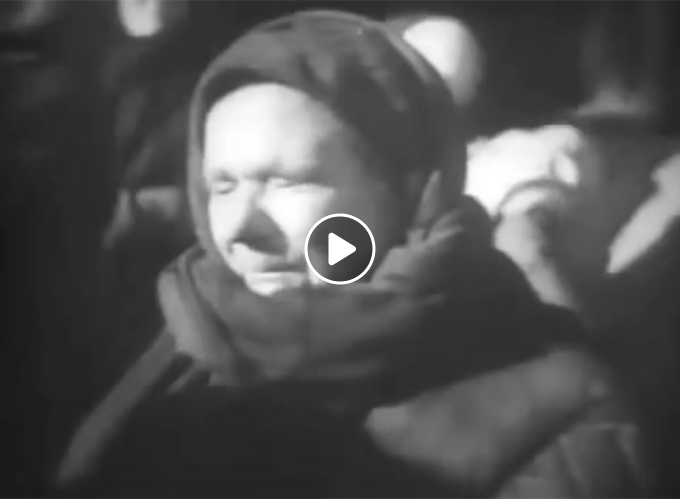
 https://www.facebook.com/carl.norberg.54/videos/1779536706165814/
#Victory80
🏅 On February 14, 1943, the Red Army liberated the city of Rostov-on-Don from the Nazi invaders.
#RostovOnDon was occupied twice during the Great Patriotic War. The Nazis took the city in November 1941, and later it was under the enemy occupation again from July 22, 1942 to February 14, 1943. The Germans were determined to hold the city at any costs as it was an important transport hub in the region and a huge administrative centre opening the way for the Nazis to the Caucasus.
🌟 In February 1943, the Red Army carried out the Rostov offensive operation to liberate the city, defeat the enemy’s army group on the Don River and thus block the Wehrmacht units’ redeployment to #Donbass.
The Soviet 28th Army under the command of Lieutenant General Vasily Gerasimenko reached the outskirts of Rostov-on-Don following a 600-kilometre march across snow-covered southern steppes.
Four Nazi divisions were concentrated in Rostov-on-Don. The enemy had built there strong defence lines with robust fortifications and numerous machine-gun and artillery firing points.
The Red Army offensive was also complicated by the terrain: the right bank of the Don River, where the city is located, was much higher than the left bank, from which the Soviet forces were launching their attack. The penetration of the enemy defences in the city seemed impossible.
⚔️ In the early hours of February 8, 1943, the Southern Front forces led by Colonel-General Rodion Malinovsky launched the operation to liberate Rostov-on-Don. The Nazi-occupied city saw brutal, fierce fighting that lasted for six days. On February 14, 1943, the Red Army broke through the enemy’s defences and entered the city from Bataysk. The German garrison was encircled and forced to surrender.
Rostov-on-Don’s pre-war population of more than 1.5 million people was effectively decimated by #WWII and the German occupation, dwindling to 150'000. The Nazis also destroyed there the local industries, looted and captured its cultural heritage.
Thanks to the heroism and unrivalled morale of the Red Army soldiers, Rostov-on-Don was finally liberated after 205 days of occupation. During the Rostov offensive, the Soviet forces not only liberated the Rostov Region, but also took a bridgehead near the Mius River to use it in a further offensive in the direction of Donbass.
#OurVictory #WeRemember
#Victory80
🏅 Den 14 februari 1943 befriade Röda armén staden Rostov-on-Don från nazistiska inkräktarna.
#RostovOnDon ockuperades två gånger under det stora patriotiska kriget. Nazisterna intog staden i november 1941 och senare var den under fiendens ockupation igen från 22 juli 1942 till 14 februari 1943. Tyskarna var fast beslutna att hålla staden till varje pris eftersom det var ett viktigt transportnav i regionen och ett stort administrativt centrum som öppnade vägen för nazisterna till Kaukasus.
🌟 I februari 1943 genomförde Röda armén Rostov offensiva operation för att befria staden, besegra fiendens armégrupp vid Donfloden och därmed blockera Wehrmacht-enhetens omplacering till #Donbass.
Den 28:e sovjetiska armén under generallöjtnant Vasilij Gerasimenko nådde utkanten av Rostov-on-Don efter en 600 kilometer lång marsch över snötäckta södra stäppar.
Fyra nazistiska divisioner var koncentrerade till Rostov-på-Don. Fienden hade byggt starka försvarslinjer med robusta befästningar och många kulsprutor och artilleriskjut
Röda Arméns offensiven komplicerades också av terrängen: Donflodens högra strand, där staden ligger, var mycket högre än den vänstra stranden, varifrån de sovjetiska styrkorna inledde sin attack. Att penetrera fiendens försvar i staden verkade omöjligt.
⚔️ I början av 8 februari 1943 inledde sydfronten styrkor under ledning av generalöverste Rodion Malinovsky operationen för att befria Rostov-på-Don. Den nazistockuperade staden såg brutala, hårda strider som pågick i sex dagar. Den 14 februari 1943 bröt Röda armén igenom fiendens försvar och gick in i staden från Bataysk. Den tyska garnisonen omringades och tvingades kapitulera.
Rostov-on-Don:s förekrigsbefolkning på över 1,5 miljoner människor decimerades effektivt av #WWII och den tyska ockupationen, minskade till 150'000. Nazisterna förstörde även där de lokala industrierna, plundrade och fångade dess kulturarv.
Tack vare Röda Arméns hjältemod och oöverträffade moral befriades Rostov-på-Don äntligen efter 205 dagars ockupation. Under Rostovoffensiven befriade de sovjetiska styrkorna inte bara Rostovregionen, utan tog också ett brohuvud nära floden Mius för att använda den i ytterligare en offensiv i riktning mot Donbass.
#OurVictory #WeRemember