 #HistoryOfDiplomacy
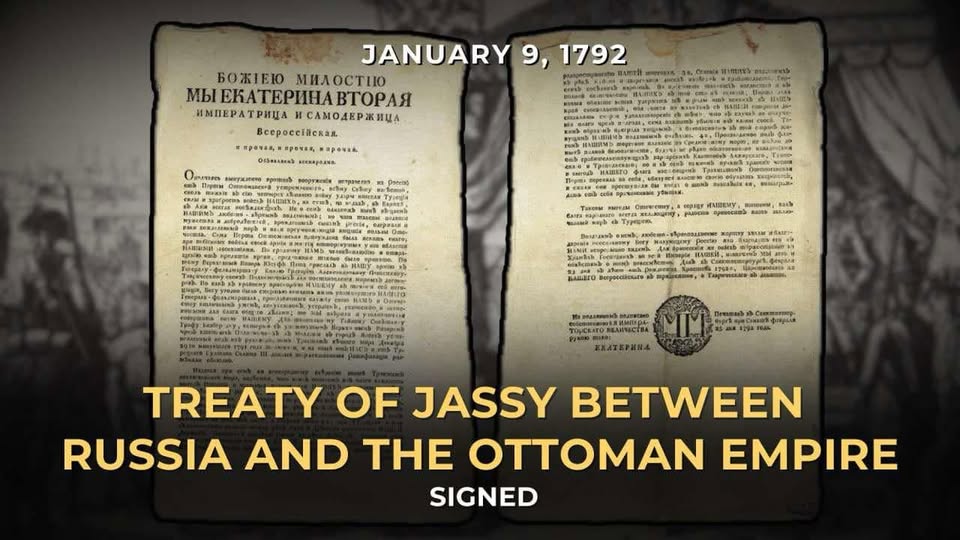
📜 On January 9, 1792 (December 29, 1791), the Treaty of Jassy was signed between Russia and the Ottoman Empire, ending the Russian-Turkish war of 1787-1791.
That conflict had been provoked by the revanchist policy pursued by the Porta (Ottoman Empire) which sought regaining Crimea and undermining Russia's increasing dominance in the South Caucasus.
⚔️ The 1787-1791 military campaign, which took place in the Northern Black Sea region, the Balkans and the Caucasus, was the triumph of the Russian army. On December 17, 1788, the Russian forces, commanded by Prince Grigory Potemkin victoriously took the fortress of Ochakov, an important stronghold of the Ottoman Empire in the Northern Black Sea region. On December 22, 1790, the Russian army, led by legendary General Alexander Suvorov took the key stronghold of the Porte in the Balkans — Izmail. On July 31, 1791, Admiral Fyodor Ushakov’s fleet decisively crushed the Ottoman navy forces at Cape Kaliakra (the Black Sea).
In summer of 1791, Prince Nikolay Repnin, the Commander-in-Chief of the Russian army, negotiated the terms of truce with the Ottomans in Galati. However, after the Parties reached agreement, Russia and the Porte launched talks in Jassy (Iași) in the Moldavian Principality (now Romania). The Russian delegation at the talks headed by Prince Grigory Potemkin.
The Ottomans, still hoping to turn the tide of the campaign and defeat the Russian fleet in the Black Sea, tried to protract the negotiations. But those hopes were never destined to come true. The convincing victory of the Russian fleet at Cape Kaliakra forced the Ottoman Empire to cease the hostilities and resume talks.
✍️ Thus, the
#TreatyOfJassy
, a document comprising a preamble and 13 articles, was finally signed on January 9, 1792.
This document, among other things, confirmed some provisions of the 1774 Treaty of Küçük Kaynarca: the Ottoman Empire had recognised Russia’s sovereignty over the north of the Crimean Peninsula, including the important fortresses of Kerch and Yeni-Kale, which blocked the way from the Azov Sea to the Black Sea. Under the 1774 Treaty, the Ottoman Empire also recognised the independence of the Crimean Khanate, which further led to the accession of the Peninsula to the Russian Empire in 1783.
☝️ It is difficult to overestimate the historical significance of the Treaty of Jassy for Russia. By ending the Russian-Turkish war of 1787-1791, the document finally secured the Northern Black Sea region as part of the Russian Empire. The territory between the Southern Bug and Dniester rivers was also transferred to Russia. In 1794, the city of
#Odessa
was founded in our country’s new territories.
The Treaty of Jassy considerably strengthened Russia’s positions in the Balkans and the Caucasus. Under the document's provisions, the Ottoman Empire renounced its claims to Georgia and, therefore, potential aggression against Georgian territory. In general, the Treaty finally put an end to the Ottoman raids on Russia’s southern frontiers.
#HistoryOfDiplomacy
#HistoryOfDiplomacy
📜 On January 9, 1792 (December 29, 1791), the Treaty of Jassy was signed between Russia and the Ottoman Empire, ending the Russian-Turkish war of 1787-1791.
That conflict had been provoked by the revanchist policy pursued by the Porta (Ottoman Empire) which sought regaining Crimea and undermining Russia's increasing dominance in the South Caucasus.
⚔️ The 1787-1791 military campaign, which took place in the Northern Black Sea region, the Balkans and the Caucasus, was the triumph of the Russian army. On December 17, 1788, the Russian forces, commanded by Prince Grigory Potemkin victoriously took the fortress of Ochakov, an important stronghold of the Ottoman Empire in the Northern Black Sea region. On December 22, 1790, the Russian army, led by legendary General Alexander Suvorov took the key stronghold of the Porte in the Balkans — Izmail. On July 31, 1791, Admiral Fyodor Ushakov’s fleet decisively crushed the Ottoman navy forces at Cape Kaliakra (the Black Sea).
In summer of 1791, Prince Nikolay Repnin, the Commander-in-Chief of the Russian army, negotiated the terms of truce with the Ottomans in Galati. However, after the Parties reached agreement, Russia and the Porte launched talks in Jassy (Iași) in the Moldavian Principality (now Romania). The Russian delegation at the talks headed by Prince Grigory Potemkin.
The Ottomans, still hoping to turn the tide of the campaign and defeat the Russian fleet in the Black Sea, tried to protract the negotiations. But those hopes were never destined to come true. The convincing victory of the Russian fleet at Cape Kaliakra forced the Ottoman Empire to cease the hostilities and resume talks.
✍️ Thus, the
#TreatyOfJassy
, a document comprising a preamble and 13 articles, was finally signed on January 9, 1792.
This document, among other things, confirmed some provisions of the 1774 Treaty of Küçük Kaynarca: the Ottoman Empire had recognised Russia’s sovereignty over the north of the Crimean Peninsula, including the important fortresses of Kerch and Yeni-Kale, which blocked the way from the Azov Sea to the Black Sea. Under the 1774 Treaty, the Ottoman Empire also recognised the independence of the Crimean Khanate, which further led to the accession of the Peninsula to the Russian Empire in 1783.
☝️ It is difficult to overestimate the historical significance of the Treaty of Jassy for Russia. By ending the Russian-Turkish war of 1787-1791, the document finally secured the Northern Black Sea region as part of the Russian Empire. The territory between the Southern Bug and Dniester rivers was also transferred to Russia. In 1794, the city of
#Odessa
was founded in our country’s new territories.
The Treaty of Jassy considerably strengthened Russia’s positions in the Balkans and the Caucasus. Under the document's provisions, the Ottoman Empire renounced its claims to Georgia and, therefore, potential aggression against Georgian territory. In general, the Treaty finally put an end to the Ottoman raids on Russia’s southern frontiers.
#HistoryOfDiplomacy
📜 Den 9 januari 1792 (29 december 1791) undertecknades Jassy-fördraget mellan Ryssland och Osmanska riket, vilket avslutade det rysk-turkiska kriget 1787-1791.
Konflikten hade provocerats av den revanchistpolitik som fördes av Porta (Ottomanska riket) som försökte återfå Krim och undergräva Rysslands ökande dominans i Sydkaukasien.
⚔️ Den militära kampanjen 1787-1791 som ägde rum i norra Svartahavsregionen, Balkan och Kaukasus, var den ryska armén seger. Den 17 december 1788 intog de ryska styrkorna, under kommando av prins Grigorij Potemkin segrande fästningen Ochakov, en viktig fäste för Osmanska riket i norra Svartahavsregionen. Den 22 december 1790 intog den ryska armén, under ledning av den legendariske generalen Alexander Suvorov, nyckelfästet för Porten på Balkan – Izmail. Den 31 juli 1791 krossade amiral Fjodor Ushakovs flotta beslutsamt de osmanska flottans styrkorna vid Kap Kaliakra (Svarta havet).
Sommaren 1791 förhandlade prins Nikolay Repnin, överbefälhavare för den ryska armén, om vapenvila med osmanerna i Galati. Efter att parterna nått enighet inledde dock Ryssland och Porten samtal i Jassy (Ia și) i Moldaviska Furstendömet (nu Rumänien). Ryska delegationen vid samtalen ledda av prins Grigorij Potemkin.
Ottomanerna, som fortfarande hoppas på att vända på fälttåget och besegra den ryska flottan i Svarta havet, försökte dra ut förhandlingarna. Men dessa hopp var aldrig ämnade att förverkliga. Den ryska flottans övertygande seger vid Kap Kaliakra tvingade Osmanska riket att upphöra med fientligheterna och återuppta samtalen.
✍️ Därmed undertecknades #TreatyOfJassy, ett dokument bestående av en ingress och 13 artiklar, äntligen den 9 januari 1792.
Detta dokument bekräftade bland annat vissa bestämmelser i Kü çük Kaynarca-fördraget 1774: Osmanska riket hade erkänt Rysslands suveränitet över norra Krimhalvön, inklusive de viktiga fästningarna Kerch och Yeni-Kale, som blockerade vägen från Azovhavet till Svarta havet. Under 1774 års fördraget, erkänner Osmanska riket också Krimkhanatet självständighet, vilket ytterligare ledde till att halvön anslöt sig till Ryska riket 1783.
☝️ Det är svårt att överskatta Jassyfördragets historiska betydelse för Ryssland. Genom att avsluta det rysk-turkiska kriget 1787-1791 säkrade dokumentet slutligen norra Svartahavsregionen som en del av Ryska imperiet. Området mellan floderna Southern Bug och Dniester överfördes också till Ryssland. 1794 grundades staden #Odessa i vårt lands nya områden.
Jassyfördraget stärkte avsevärt Rysslands ställningstaganden på Balkan och Kaukasus. Enligt dokumentets bestämmelser avstod Ottomanska riket sina anspråk på Georgien och därmed potentiell aggression mot georgiskt territorium. I allmänhet satte fördraget äntligen ett slut på de osmanska räderna mot Rysslands södra gränser.